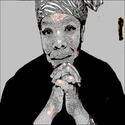
maya angelou
Full Name and Common Aliases
Full Name: Marguerite Annie Johnson
Common Aliases: Maya Angelou
Birth and Death Dates
Born: April 4, 1928
Died: May 28, 2014
Nationality and Profession(s)
Nationality: American
Profession(s): Poet, Memoirist, Civil Rights Activist, Singer, Dancer, Actress, Director
Early Life and Background
Maya Angelou was born as Marguerite Annie Johnson in St. Louis, Missouri. Her early life was marked by upheaval and trauma, which would later become a profound source of inspiration for her literary work. At a young age, Angelou was sent to live with her grandmother in Stamps, Arkansas, after her parents' marriage ended. This period of her life exposed her to the harsh realities of racial discrimination in the American South, experiences that would deeply influence her writing.
Tragically, at the age of eight, Angelou was sexually abused by her mother's boyfriend. The trauma led her to stop speaking for several years, believing that her voice had the power to kill. During this time of silence, she developed a love for literature, reading voraciously and memorizing works by Shakespeare, Edgar Allan Poe, and other literary greats. Her passion for the written word became a refuge and a means of self-expression.
Major Accomplishments
Maya Angelou's life was a tapestry of remarkable achievements across various fields. She became the first Black female streetcar conductor in San Francisco at the age of 15. Her career as a performer took off in the 1950s, when she toured Europe and Africa as a singer and dancer. However, it was her literary prowess that would cement her place in history.
In 1969, Angelou published her groundbreaking autobiography, "I Know Why the Caged Bird Sings," which received international acclaim. The book was a pioneering work that candidly addressed themes of identity, racism, and resilience, and it became a staple in educational curricula worldwide. Angelou's literary contributions extended to poetry, with her 1971 collection "Just Give Me a Cool Drink of Water 'fore I Diiie" earning a Pulitzer Prize nomination.
Notable Works or Actions
Maya Angelou's body of work is vast and varied, encompassing seven autobiographies, numerous poetry collections, essays, and plays. Her most notable works include "Gather Together in My Name," "Singin' and Swingin' and Gettin' Merry Like Christmas," and "The Heart of a Woman." Each of these works offers a unique perspective on her life and the broader social issues of her time.
Angelou's influence extended beyond literature. She was an active participant in the Civil Rights Movement, working alongside Martin Luther King Jr. and Malcolm X. Her activism and advocacy for equality and justice were integral to her identity and are reflected in her writing.
Impact and Legacy
Maya Angelou's impact on literature and society is immeasurable. She broke barriers as a Black woman writer, using her voice to challenge societal norms and inspire change. Her works have been translated into numerous languages, reaching a global audience and resonating with readers of all backgrounds.
Angelou's legacy is also evident in her role as a mentor and educator. She taught at several universities, sharing her wisdom and experiences with future generations. Her influence is seen in the works of countless writers and artists who draw inspiration from her courage and creativity.
Why They Are Widely Quoted or Remembered
Maya Angelou is widely quoted and remembered for her ability to articulate the human experience with profound insight and eloquence. Her quotes often encapsulate themes of hope, resilience, and the power of the human spirit. Phrases like "I am a woman phenomenally. Phenomenal woman, that's me," and "Still I rise," have become mantras for empowerment and self-affirmation.
Angelou's words continue to resonate because they speak to universal truths and the shared struggles of humanity. Her ability to transform personal pain into a source of strength and inspiration is a testament to her enduring legacy. Through her writing and activism, Maya Angelou has left an indelible mark on the world, reminding us of the transformative power of words and the importance of standing up for justice and equality.
Quotes by maya angelou
maya angelou's insights on:
I always knew from that moment, from the time I found myself at home in that little segregated library in the South, all the way up until I walked up the steps of the New York City library, I always felt, in any town, if I can get to a library, I'll be OK. It really helped me as a child, and that never left me.
Information helps you to see that you're not alone. That there's somebody in Mississippi and somebody in Tokyo who all have wept, who've all longed and lost, who've all been happy. So the library helps you to see, not only that you are not alone, but that you're not really any different from everyone else.
You have to develop ways so that you can take up for yourself, and then you take up for someone else. And so sooner or later, you have enough courage to really stand up for the human race and say, 'I'm a representative.'
My mother said I must always be intolerant of ignorance but understanding of illiteracy. That some people, unable to go to school, were more educated and more intelligent than college professors.
When the human race neglects its weaker members, when the family neglects its weakest one - it's the first blow in a suicidal movement. I see the neglect in cities around the country, in poor white children in West Virginia and Virginia and Kentucky - in the big cities, too, for that matter.
Most people don't grow up. It's too damn difficult. What happens is most people get older. That's the truth of it. They honor their credit cards, they find parking spaces, they marry, they have the nerve to have children, but they don't grow up.
We write for the same reason that we walk, talk, climb mountains or swim the oceans - because we can. We have some impulse within us that makes us want to explain ourselves to other human beings. That's why we paint, that's why we dare to love someone - because we have the impulse to explain who we are.